Yide Ran

I work on AI infrastructure and post-training.

Ph.D. student in Computer Science
Stevens Institute of Technology

GPU kernels · MoE inference · Distributed serving · PEFT training

Yide Ran

Selected work

Project lead · with Lambda and OpenFold · 2026

TurboPairFormer

Hopper GPU kernels for Triangle Attention and the Triangle Multiplicative Update, now used to train OpenFold3's next-generation protein folding model.
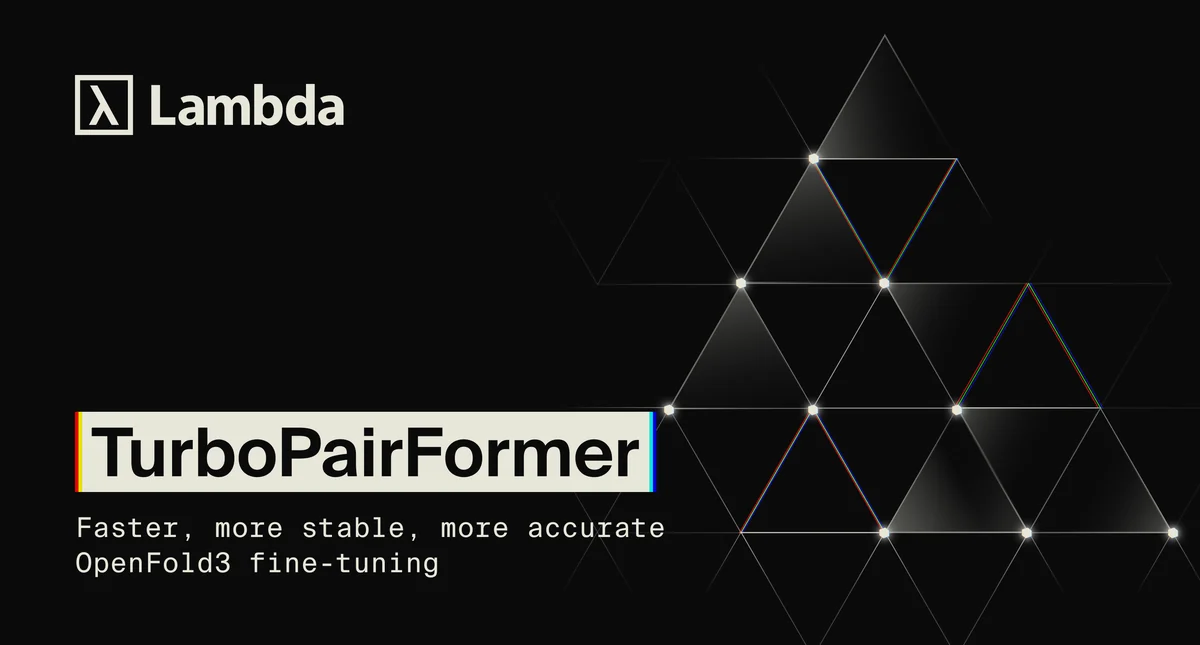

Lambda blog post: TurboPairFormer, faster, more stable, more accurate OpenFold3 fine-tuning Stevens Institute of Technology, Lambda, and OpenFold
Technical details & reproducibility

The backward pass rebuilds each probability tile once and reuses it for dQ, dK, dV and dBias, and ordered partial reductions replace floating-point atomics so results are bitwise reproducible.

600/600
inputs bitwise reproducible
28–47%
lower gradient RMSE with BF16 residual compensation
pip install turbopairformer

Machine Learning Research Intern · Lambda · 2025

MoE inference at Lambda

Built MoE inference stacks on H100 and B200 for GPT-OSS-120B, DeepSeek V3/R1 and Qwen3-235B-A22B with TensorRT-LLM, CUTLASS and DeepGEMM.

router top-kall-to-allgrouped GEMMexpert aggregation

Profiling, benchmarks & BLAZE

I designed benchmark suites across tensor- and expert-parallel layouts and routing strategies (the real router vs. round-robin) to measure how much expert load imbalance costs on Blackwell.

Profiling with Nsight Systems and Nsight Compute split each MoE layer into four stages and showed that imbalance across experts dominated inference time. That finding later led to BLAZE.

I also wrote internal reports and a public technical blog on backend selection, expert-parallel layouts, and routing behavior across Random, ShareGPT, GSM8K and OpenMath.

News

  1. Lambda published a blog post on TurboPairFormer: faster, more stable, more accurate OpenFold3 fine-tuning.

  2. TurboPairFormer is out on arXiv and PyPI. Its kernels now accelerate OpenFold3 training.

  3. First-author paper on scalable LLM data attribution and valuation accepted to NeurIPS 2026 as a poster.

  4. BLAZE accepted to the MLSys 2026 Young Professionals Symposium.

More news
  1. Two papers at ICLR 2026: one on non-IID drift in zeroth-order federated LLM fine-tuning, and one on randomized antipodal search for LLM unlearning.

  2. Joined Lambda as a Machine Learning Research Intern, working on MoE inference on H100 and B200.

Publications

2026

  1. Sketching the Readout of Large Language Models for Scalable Data Attribution and Valuation Yide Ran, Jianwen Xie, Minghui Wang, Wenjin Zheng, Denghui Zhang, Chuan Li, Zhaozhuo Xu NeurIPS 2026 · posterCode
  2. TurboPairFormer: Fast and Stable Protein Folding Model Training with an Optimized Triangle Attention Kernel Yide Ran, Chelsea Lowman, Jan Domański, David Hartmann, Jenke Scheen, Jennifer Wei, Chuan Li, Jianwen Xie, Zhaozhuo Xu arXiv:2610.05854 · submitted to ICLR 2027PaperPyPICode
  3. BLAZE: Bias-Driven Load-Aware Zero-Overhead Expert Routing for MoE Inference Yide Ran, DJ Matusz, Jianwen Xie, Chuan Li, Zhaozhuo Xu MLSys 2026 Young Professionals Symposium
  4. Mitigating Non-IID Drift in Zeroth-Order Federated LLM Fine-Tuning with Transferable Sparsity Yide Ran, Wentao Guo, Jingwei Sun, Yanzhou Pan, Xiaodong Yu, Hao Wang, Jianwen Xie, Yiran Chen, Denghui Zhang, Zhaozhuo Xu ICLR 2026
  5. Randomized Antipodal Search Done Right for Data Pareto Improvement of LLM Unlearning Ziwen Liu, Huawei Lin, Yide Ran, Denghui Zhang, Jianwen Xie, Chuan Li, Weijie Zhao, Zhaozhuo Xu ICLR 2026PaperPoster
  6. FedML Parrot: A Scalable Federated Learning Simulation System via Heterogeneity-aware Scheduling on Hierarchical Sequential Training Zhenheng Tang, Xiaowen Chu, Yide Ran, Sunwoo Lee, Yonggang Zhang, Yuxin Wang, Alex Qiaozhong Liang, Salman Avestimehr, Chaoyang He IEEE Transactions on Computers, 2026DOIarXiv

2025

  1. Zeroth-Order Fine-Tuning of LLMs with Transferable Static Sparsity Wentao Guo, Jikai Long, Yimeng Zeng, Zirui Liu, Xinyu Yang, Yide Ran, Jacob R Gardner, Osbert Bastani, Christopher De Sa, Xiaodong Yu, Beidi Chen, Zhaozhuo Xu ICLR 2025
  2. ALinFiK: Learning to Approximate Linearized Future Influence Kernel for Scalable Third-Party LLM Data Valuation Yanzhou Pan, Huawei Lin, Yide Ran, Jiamin Chen, Xiaodong Yu, Weijie Zhao, Denghui Zhang, Zhaozhuo Xu NAACL 2025 · oral

2024

  1. ScaleLLM: A Resource-Frugal LLM Serving Framework by Optimizing End-to-End Efficiency Yuhang Yao, Han Jin, Alay Dilipbhai Shah, Shanshan Han, Zijian Hu, Yide Ran, Dimitris Stripelis, Zhaozhuo Xu, Salman Avestimehr, Chaoyang He EMNLP 2024 · Industry Track
  2. Alopex: A Computational Framework for Enabling On-Device Function Calls with LLMs Yide Ran, Zhaozhuo Xu, Yuhang Yao, Zijian Hu, Shanshan Han, Han Jin, Alay Dilipbhai Shah, Jipeng Zhang, Dimitris Stripelis, Tong Zhang, Salman Avestimehr, Chaoyang He arXiv:2411.05209 · preprint, 2024Paper

About

I work on efficient AI training and inference: GPU kernels, MoE inference, and distributed serving.

I'm Yide Ran (冉宜德), a Ph.D. student in Computer Science at Stevens Institute of Technology. I've built and shipped kernels on NVIDIA GB10, H100, H200 and B200 with CUDA, Triton, CUTLASS and TensorRT-LLM. As a research intern at Lambda, I worked on MoE inference on H100 and B200, and I prepared MLPerf Inference v6.0 submissions with Lambda.

Before the Ph.D., I was an engineer at TensorOpera AI, where I worked on vLLM serving, RAG and tool use for a production agent platform, and at Meituan. I hold an M.S. in Electrical and Computer Engineering from USC and a B.S. from Qingdao University.

Away from the keyboard, I play the dizi (Chinese bamboo flute) and basketball, and I spend more time in NBA 2K than I should.

Experience

  1. Sep – Dec 2025

    LambdaMachine Learning Research InternMoE inference stacks and benchmarking on H100 and B200 for GPT-OSS-120B, DeepSeek V3/R1 and Qwen3-235B-A22B. The profiling work led to BLAZE.

  2. May 2022 – Aug 2024

    TensorOpera AIFull-stack, AI agent and LLM inference engineerCore engineer on the production AI-agent platform: vLLM serving with prefix KV caching, the RAG pipeline, document ingestion, and function-calling pipelines.

  3. May 2021 – Apr 2022

    MeituanSoftware EngineerPayment-system features and analytics instrumentation; app startup and memory optimization.

Education

  1. 2024 – present

    Stevens Institute of TechnologyPh.D. student, Computer Science

  2. Jan – May 2025

    UTHealth HoustonVisiting student

  3. 2019 – 2020

    University of Southern CaliforniaM.S., Electrical and Computer Engineering

  4. 2014 – 2018

    Qingdao UniversityB.S., Electrical Automation

Toolbox

GPUs
NVIDIA GB10 (DGX Spark), H100, H200, B200
Kernels
CUDA C++, Triton, CUTLASS, cuEquivariance, AOT CUDA extensions, custom autograd
Serving
TensorRT-LLM, vLLM, Hugging Face Transformers, Axum, FastAPI, gRPC
Profiling
Nsight Systems, Nsight Compute, Compute Sanitizer
Languages
Python, C++, Go, Java, TypeScript

Honors

  • 7th Prize, Self-driving Car Competition, USC Viterbi School2019
  • Participation Award, MCM/ICM (COMAP)2017
  • 2nd Prize, Chinese College Students' Mathematical Modeling Competition2016